
Understanding Oil Trade in a Sanctioned Market Environment
Global oil trade has not stopped under sanctions, it has adapted. As supply routes shift and refining hubs take on a larger role, oil continues to move through indirect channels, reshaping how markets function and raising questions about how effective sanctions are in practice.
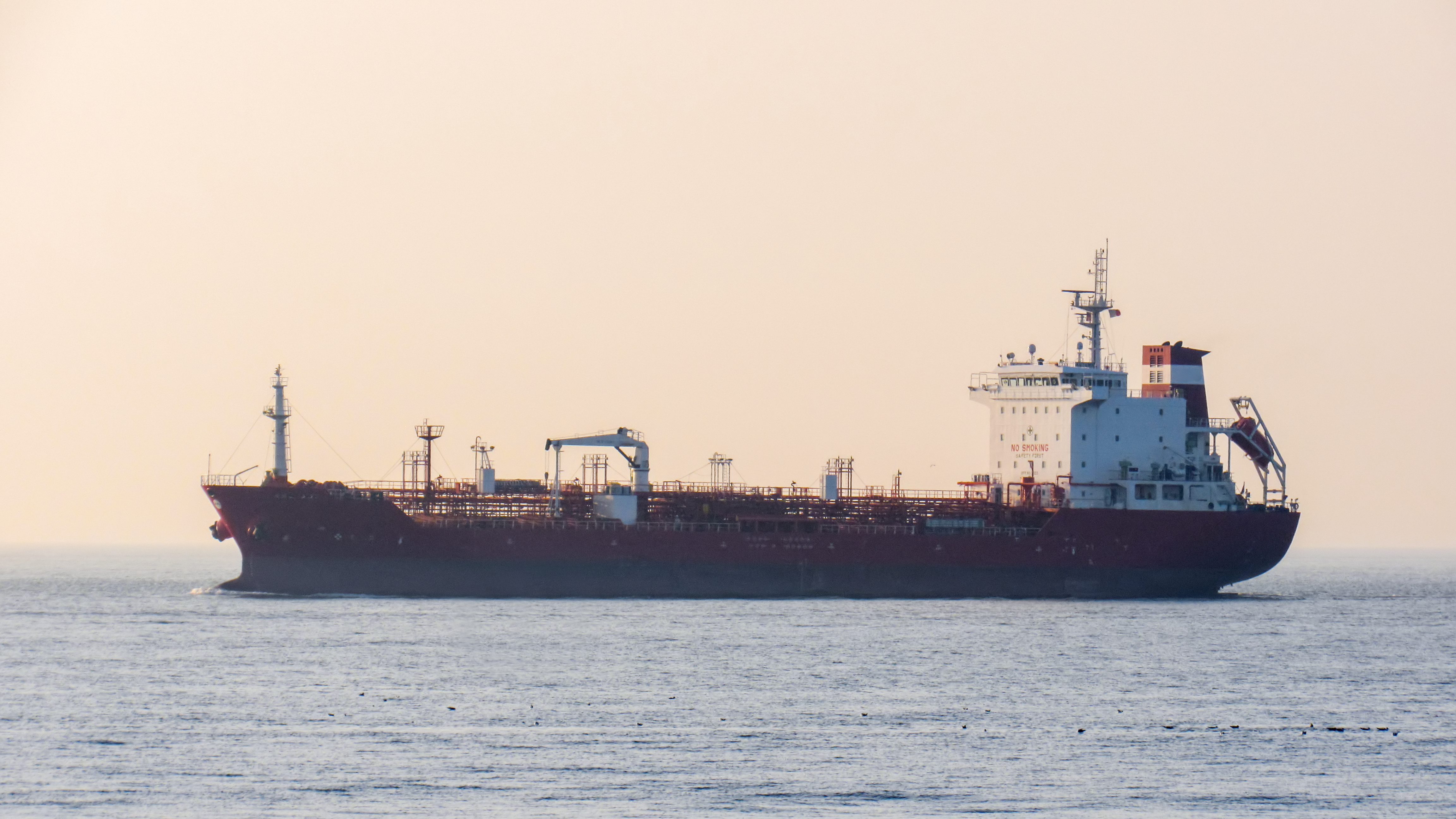
For more than two years, Western governments have framed oil sanctions on Russia as a central pillar of economic pressure. The stated aim was to reduce energy revenues, constrain war financing, and force buyers to choose between Western finance and Russian supply. In practice, however, the system was never designed as a full embargo. The price cap framework explicitly allowed shipping, insurance, financing, and related services for Russian crude and petroleum products sold at or below the cap. The objective was not to remove Russian oil from the global market, but to keep it flowing while trying to reduce Moscow’s earnings.
That design created an obvious contradiction. Western governments wanted to punish Russia without triggering a supply shock or a domestic fuel price spike. The result was a sanctions system that restricted some channels while leaving others open by design. That gave traders, refiners, shippers, and importers a strong incentive to keep Russian molecules moving through lawful, semi opaque, or commercially adaptive routes. The loophole was not accidental. It was built into the balancing act from the beginning.
That gap between policy rhetoric and market reality has become more visible in 2026. Reuters reported in April that the United States was expected to extend a waiver permitting some purchases of sanctioned Russian oil and petroleum products after earlier temporary relief tied to energy disruption and rising fuel prices. Critics argued that the waiver undercut the broader sanctions strategy at the very moment officials claimed pressure on Russia was intensifying.
The waiver did not create the workaround system, but it made an already permissive structure more permissive. Reuters also reported in March that Asia was set to import a record volume of Russian fuel oil, with more than 3 million tons headed to the region and Southeast Asia expected to receive the largest share, largely through Singapore and Malaysia. Much of that volume was expected to end up in marine fuel markets, showing how discounted Russian feedstock could still find profitable routes into global energy systems.
Singapore sits at the center of this story, but precision matters. Reuters reported that Singapore itself does not openly import Russian oil for domestic use because of sanctions risk. Yet nearby waters are used for ship to ship transfers, and vessels increasingly list Singapore as a destination even when cargoes ultimately discharge near Malaysia or move into floating storage. Reuters cited traders saying Singapore is often used as a placeholder destination to obscure final buyers. In other words, Singapore’s role is less about direct importation and more about routing, transfer, storage, blending, and opacity.
S and P Global underscored that role at the end of 2025. Its Commodities at Sea data showed Russian fuel oil and residue unloaded in Singapore reaching record levels, more than 40 percent above the previous year and the highest annual volume since its tracking began. That matters because Singapore is a major bunkering hub where cheap Russian inputs can be turned into high value marine fuel blends for a premium shipping market.
The vulnerability in the sanctions regime lies in transformation. Russian hydrocarbons do not need to arrive under a Russian label to retain economic value for Russia. They can pass through storage, ship to ship transfer, blending, refining, and resale chains that alter their legal identity long before they reach an end buyer. Reuters reported that Russia increased ship to ship transfers around Port Said, Togo, Morocco, and Italy as sanctions pressure and tanker shortages reshaped logistics. These transfers are not just operational adjustments. They are engines of opacity. They make origin harder to trace, enforcement harder to prove, and cargo histories easier to distance from Russian ports.
Singapore is only one node in that broader system. Malaysia appears in the same Southeast Asian destination pattern. India remains the most consequential refining hub because of the sheer scale of its Russian crude imports. Turkey and Brunei also matter. The Centre for Research on Energy and Clean Air reported in late 2025 that refineries in India, Turkiye, and Brunei that process Russian crude exported hundreds of millions of euros worth of petroleum products to sanctioning countries in a single month. That finding captures the loophole clearly: sanctioning economies continued to buy products whose value chain still included Russian crude, even while publicly maintaining restrictions on Russian oil.
This is the core contradiction. The most important question is no longer whether a shipment is legally called Russian when it arrives. The more important question is whether sanctioning countries are still monetizing Russian production through third country refining, blending, and resale. Economically, the answer is clearly yes. Politically, that answer is obscured by paperwork, country of origin rules, and distinctions between crude and refined products.
European authorities eventually acknowledged that problem more directly than Washington. In 2025, the European Commission moved to ban refined products derived from Russian crude and warned that additional due diligence was needed for imports from countries that sharply increased purchases of Russian oil after the invasion. Its own guidance also acknowledged that oil is fungible and cannot be physically segregated once mixed, which makes proof of non Russian origin inherently difficult in many refinery systems. That is effectively an admission that the commodity itself is easier to reroute than the sanctions regime is to enforce.
Even so, the system still contains major weaknesses. The same European guidance allows reduced evidentiary burdens for imports from designated partner countries, and regulators have acknowledged that blending, relabeling, and indirect routing create real circumvention risks. CREA has argued that the loophole can only be meaningfully closed by moving away from country based assumptions and toward refinery based restrictions, targeting facilities that process Russian crude regardless of the final product’s declared origin.
The incentives that keep this system alive are layered and mutually reinforcing. Russia wants export revenue. Traders want margin. Refiners want discounted feedstock. Bunkering hubs want cheap supply for premium markets. Importing economies want stable fuel prices. Politicians want to appear tough on Russia without triggering inflation at home. Regulators want proof in a market where molecules are routinely mixed, transferred, and relabeled across jurisdictions. Every actor can point to a rule, waiver, attestation, or technical distinction. The system persists because the political cost of admitting the contradiction is higher than the cost of maintaining it.
That is why the issue is no longer just legal compliance. It is strategic credibility. Sanctions are presented as coercive pressure on Russia, yet they were designed from the outset to preserve Russian flows under certain conditions. Refiners and traders profit from discounted Russian feedstock while sanctioning governments benefit politically from claiming they are not buying Russian oil directly. Regulators depend on attestations in a market where traceability is inherently weak once streams are mixed. At moments of market stress, principles soften. Waivers appear. Enforcement narrows. The signal to the market is unmistakable: strategic firmness remains conditional on fuel prices.
Singapore’s role should therefore be described carefully but firmly. The strongest documented case is not that Singapore openly buys Russian crude for domestic use and reexports it under a Russian flag. The stronger case is that Singapore and its surrounding maritime zone have become a major routing, transfer, storage, and blending node in a sanctions adapted oil system. Reuters documented the use of Singapore as a placeholder destination. S and P Global documented record Russian fuel oil unloading volumes. Reuters also showed that Singapore and Malaysia were major Southeast Asian recipients of Russian fuel oil in 2026, much of it tied to bunker markets. That makes Singapore a critical enabler in the region’s energy plumbing, even if the final destination often disappears behind marine fuel sales and transformed product categories.
India’s role is even more consequential. Once Russian crude is imported at scale, refined, and sold back into global markets, the distinction between direct and indirect support for Russian oil revenue becomes politically useful but economically thin. Turkey and Brunei reflect the same model on a smaller scale. The issue is not simply whether each shipment violates an individual sanction. The issue is that the sanctions coalition continues to buy into a market structure that rewards any intermediary capable of transforming discounted Russian crude into legally reclassified export products.
This is why the loophole is bigger than any one country. It reflects the architecture of modern sanctions in a world where oil is fungible, logistics are flexible, and compliance is often documentary rather than molecular. Russian oil has not been cleanly cut off from the markets that matter. It has been discounted, rerouted, blended, refined, relabeled, transferred offshore, and sold back into the world through jurisdictions that profit from serving as useful intermediaries. What appears politically as a sanctions regime increasingly looks commercially like a market adaptation strategy.
If Western governments want to narrow that gap, the tools are conceptually clear even if politically difficult. They can move from country based assumptions to refinery based restrictions. They can tighten vessel history checks, destination reporting, and ship to ship transfer scrutiny. They can require stronger chain of custody evidence for refined products rather than relying on attestations alone. They can align sanctions policy more honestly with domestic energy policy so that price spikes do not repeatedly trigger waivers that tell the market enforcement is negotiable. Until then, the uncomfortable reality remains: Russian oil is not bypassing sanctions because the market misunderstood the rules. It is doing so because the rules were written to preserve supply, and the market has become exceptionally skilled at turning that compromise into a business model.